

“I was not surprised by the portrait of myself,” Circe says, “the proud witch undone before the hero’s sword, kneeling and begging for mercy. Humbling women seems to me a chief pastime for poets. As if there can be no story unless we crawl and weep.”
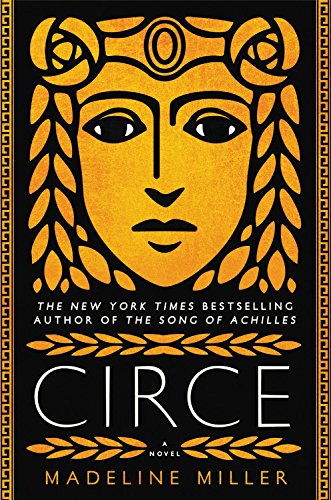
Circe is referring to the source literature, Homer’s Odyssey, in which Odysseus arrives on her island. Circe captures Odysseus’ men and turns them into pigs. No words squandered in explaining why. Madeline Miller, however, not only gave Circe her day in the court but also weaved her an intriguing and compelling backstory.
Circe is a nymph, daughter of the sun god Helios, banished to the island of Aeaea for using magic to turn a romantic rival into the monster Scylla. Here she begins to hone her craft.
At it’s core, this book is about Circe confronting what she considers are her flaws and coming to her own. This book is about celebrating the witch in Circe. The witch in every woman.
Miller explored quite a few feminine themes, such as self-discovery, insecurities, and struggling with being a new mother, in Circe’s story.
Self-discovery: When it is discovered that Circe practiced Pharmaka(witchcraft), Helios banishes her to Aeaea, an island filled with magic herbs. It is interesting that Helios banished her to an enchanted island where she can hone her craft. Was it a punishment or a form of discreet good parenting? Was he freeing her from a mediocre and banal life in his kingdom? Circe is unique, but on Aeaea she becomes self-sufficient. She truly begins her journey to loving her craft and becoming independent.
Later in the book Aeaea is termed the island where other gods can temporarily send their “difficult daughters”. Translation- Aeaea is where independent women can take time to grow and find themselves.
Insecurities: Scylla is a six headed ravenous monster. She is always seething with rage. Chomping to bits everything that passes her path. She feasts on the sailors that cross her path. No amount of consumption satiates her appetite.
I read Scylla as a manifestation of Circe’s jealousy and insecurities. Much like Scylla, a woman’s jealousy is all consuming. It consumes her peace of mind, self worth and dignity. Jealousy is an ugly monster with anger management issues. She is always on the lookout for an intrusion. It sometimes turns in to a self fulfilling prophecy.
On her journey to accepting herself Circe makes a pit stop at Scylla’s. Her metamorphosis is incomplete if she cannot put an end to her insecurities. She has to turn the manifestation of her jealousy in to stone.
Struggling with motherhood: It was oddly satisfying to read Circe’s struggles with motherhood. Miller gave a very honest portrayal of Circe’s hardships in raising and protecting her son. Circe has to cast a spell and hold up an invisible barrier engulfing the island to protect her son. She quite literally had to hold the sky up for her kid.
Positive manifestations: My most cherished part of the book however is the vision Circe has towards the end of the book. Of her drinking the potion and becoming a human. She sees a life filled with travel, good food, wine and love. This read to me more like a modern day vision board. It is was a manifestation of her happy ending. If one does not dare to dream of their happy ending, then they cannot set out to achieve it.
Madeline Miller is known for her splendid character development and she does not disappoint with Circe. Miller’s rich prose made for some memorable quotes(I had some 18 highlighted quotes). There was no prejudice in her narrative. I did not feel manipulated as a reader. I judged Circe’s mistakes and celebrated her wins and growth.
 Book Broad